Huelva - Santa Cruz de Tenerife
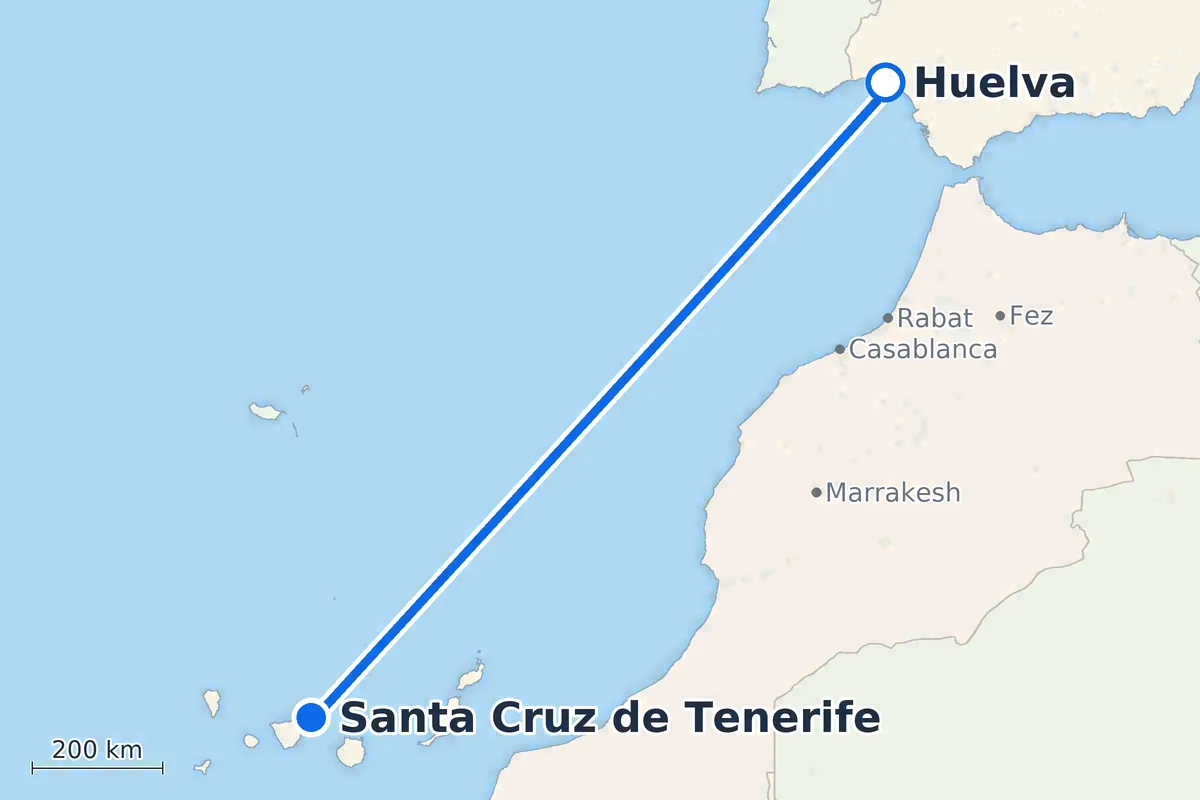
Several times a week with Fred Olsen Express from Huelva to Santa Cruz de Tenerife; 32 to 42½ hours depending on the sailing.

Mainland
The second mainland port for the Canary Islands - destinations, departure days, check-in with a vehicle and getting to Huelva
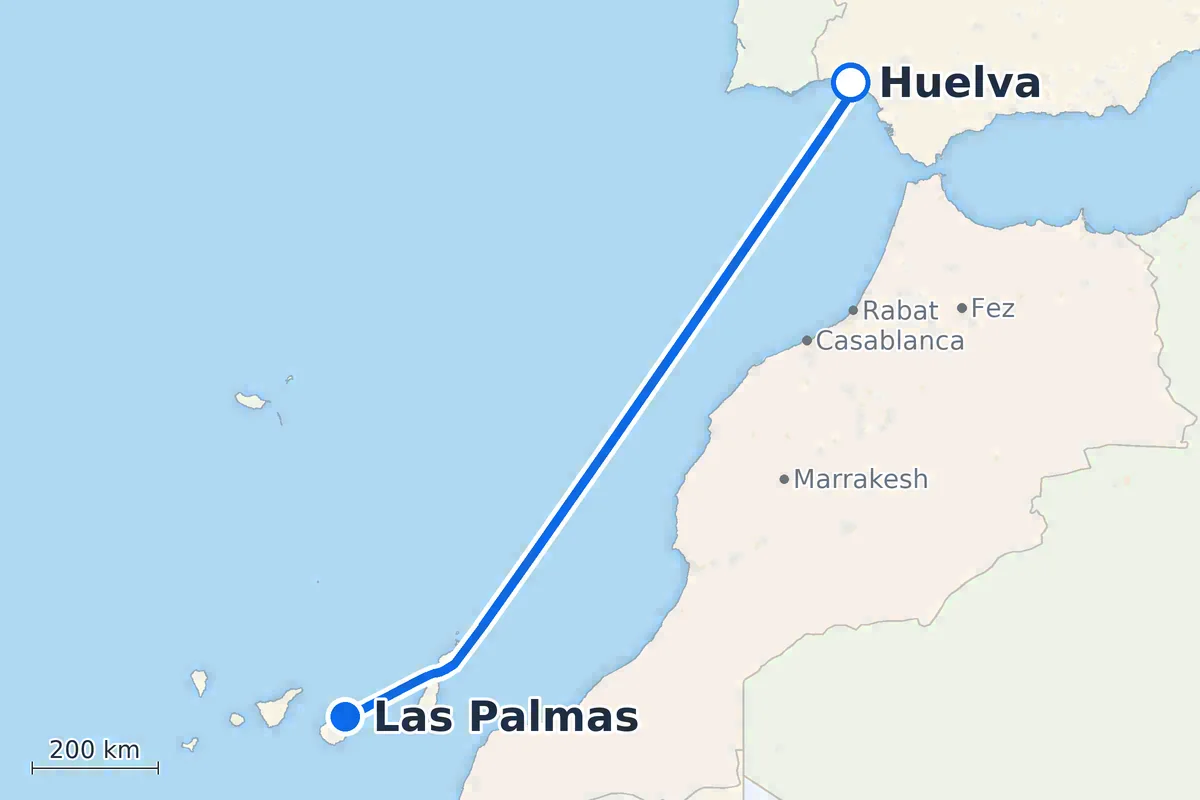
One line sails from Huelva to Gran Canaria and Tenerife. The order of the two stops changes with each departure, so sometimes Las Palmas is the quicker destination, sometimes Santa Cruz.
Both islands with crossing time and booking.
© OpenStreetMap contributors
Huelva is the mainland port of Fred Olsen Express. The Marie Curie, a ro-pax ship with cabins and a car deck, sails three times a week in each direction and serves Las Palmas and Santa Cruz de Tenerife on one line. The terminal is in the outer harbour at the Muelle Sur.
The crossing to Las Palmas takes around 39 hours if Tenerife is called at first, otherwise correspondingly shorter. The port of Puerto de la Luz lies in the city, with island ferries to Fuerteventura and Lanzarote and buses in every direction from there. Everything on booking, cabins and the terminal is on Huelva - Gran Canaria.
To Santa Cruz de Tenerife it's around 37 hours with a stop in Las Palmas. If you're continuing to La Gomera, La Palma or El Hierro, drive from Santa Cruz along the motorway to Los Cristianos; the ferries from there are on the page Ferry to Tenerife. Details on the route are on Huelva - Tenerife.
There's no direct ferry from Huelva to the eastern islands. The usual route goes via Las Palmas: to Morro Jable in 105 minutes with Fred Olsen Express or Baleària Canarias, to Arrecife in just over six hours with Baleària Canarias. If you want to stay on the same ticket with your vehicle, compare the line from Cádiz, which calls directly at Arrecife and Puerto del Rosario.
The crossing lasts one to two nights, so a cabin or reclining seat belongs in your booking. Fred Olsen Express carries pets in kennels, Pet Rooms or on the Pet Sofa; registration is compulsory and spaces are limited. Vehicles from motorbikes to motorhomes travel on the car deck; the guides Travelling to the Canary Islands by motorhome and Travelling to the Canary Islands with your dog go into more detail.
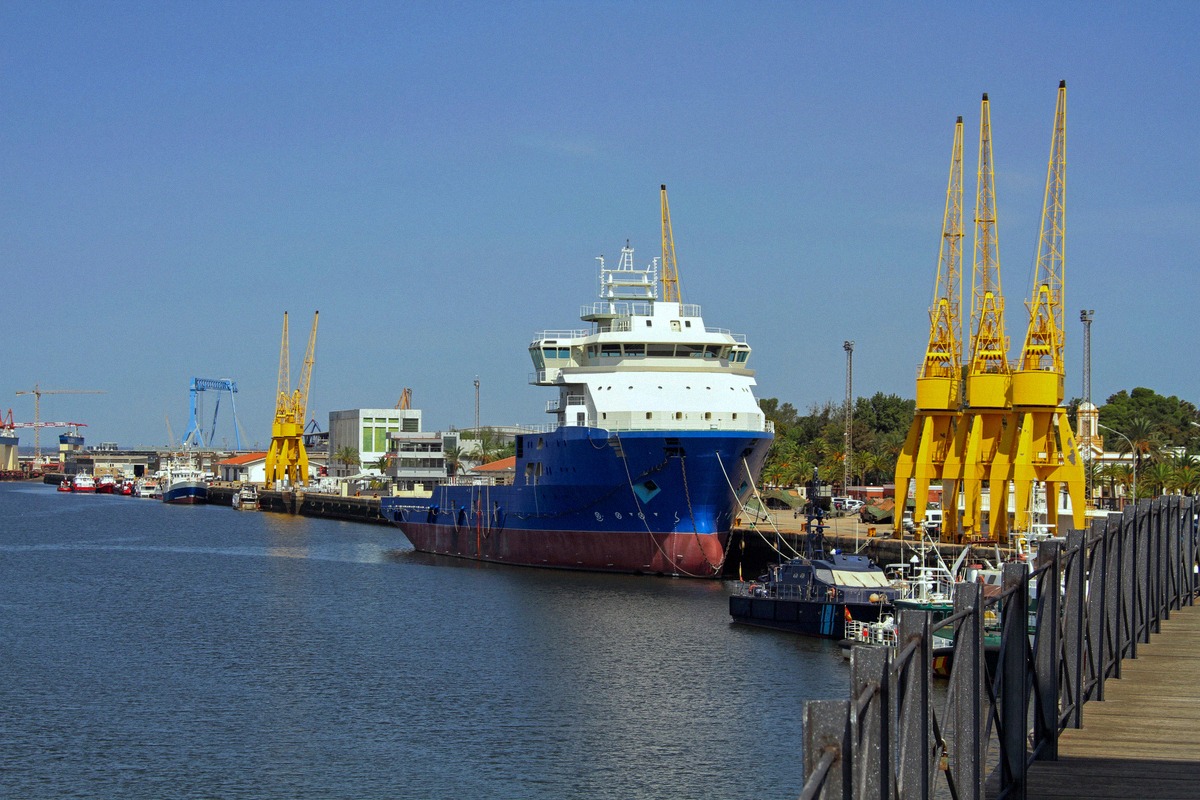
Fred Olsen Express's ferry terminal is in the outer harbour at the Muelle Sur near Palos de la Frontera, south of the city at the mouth of the Odiel.
Huelva ferry terminal, Muelle Sur (Fred Olsen Express)
Puerto Exterior Muelle Sur, s/n, 21810 Palos de la Frontera Google MapsThe A-49 links Huelva with Seville and the Portuguese border. On the edge of the city, follow the signs for Puerto and Muelle Sur; the terminal isn't in the city centre.
The desk at the Muelle Sur opens three hours before every departure, and the boarding time is shown on your boarding pass. For an overnight crossing with a car, motorhome or trailer, allow considerably more time than on the fast ferries between the islands.
Vehicle type, length and height belong in your booking; the number plate can be changed afterwards.
Trains from Seville and Madrid end at Huelva railway station, long-distance buses at the bus station in the city centre. From either, take a taxi to the terminal in the outer harbour.
The terminal at the Muelle Sur lies outside the city; build the taxi ride into your buffer time and download your boarding pass beforehand.
Frequently asked questions about the Huelva ferry port
Gran Canaria (Las Palmas) and Tenerife (Santa Cruz). The Marie Curie calls at both ports on one line, and the order changes. For Lanzarote, Fuerteventura, La Palma, La Gomera and El Hierro, you change ferries on the islands.
Around 37 hours to Santa Cruz de Tenerife and around 39 to Las Palmas, with the other port as an intermediate stop each time. Depending on the departure, the order is reversed, and the crossing times swap accordingly.
Three times a week in each direction, all year round, with Fred Olsen Express's ro-pax ship Marie Curie. Cabins, reclining seats and a car deck are on board.
Not directly. From Las Palmas you continue on to Arrecife (just over six hours) or Morro Jable (105 minutes), from Santa Cruz de Tenerife to Morro Jable (four hours). If you want to head straight for the eastern islands, sail from Cádiz with Baleària Canarias.
Huelva offers more departures a week and is Fred Olsen Express's only mainland line. Cádiz sails less often, but reaches five islands and calls at Lanzarote and Fuerteventura. For Gran Canaria and Tenerife, the departure day usually decides it.
Compare the routes from Huelva and check the departures for your date.