
Canary Islands Ferry
Cádiz - La Palma
By ferry from the Spanish mainland to the Canary Islands, a relaxed Atlantic crossing to La Isla Bonita
- 1 departure a week year-round, usually on Saturdays with Baleària Canarias from Cádiz
- Crossing in around 48 hours across the Atlantic to Santa Cruz de La Palma
- Car, motorhome, bike and pets on board, cabin for the overnight crossing
Route Guide
Ferry Cádiz - La Palma at a glance
Table of Contents
Everything about the Cádiz - La Palma ferry route: getting to the port of Cádiz, check-in for the long Atlantic crossing, facilities on board with Baleària Canarias, vehicle and pet rules, and arrival in Santa Cruz de La Palma.
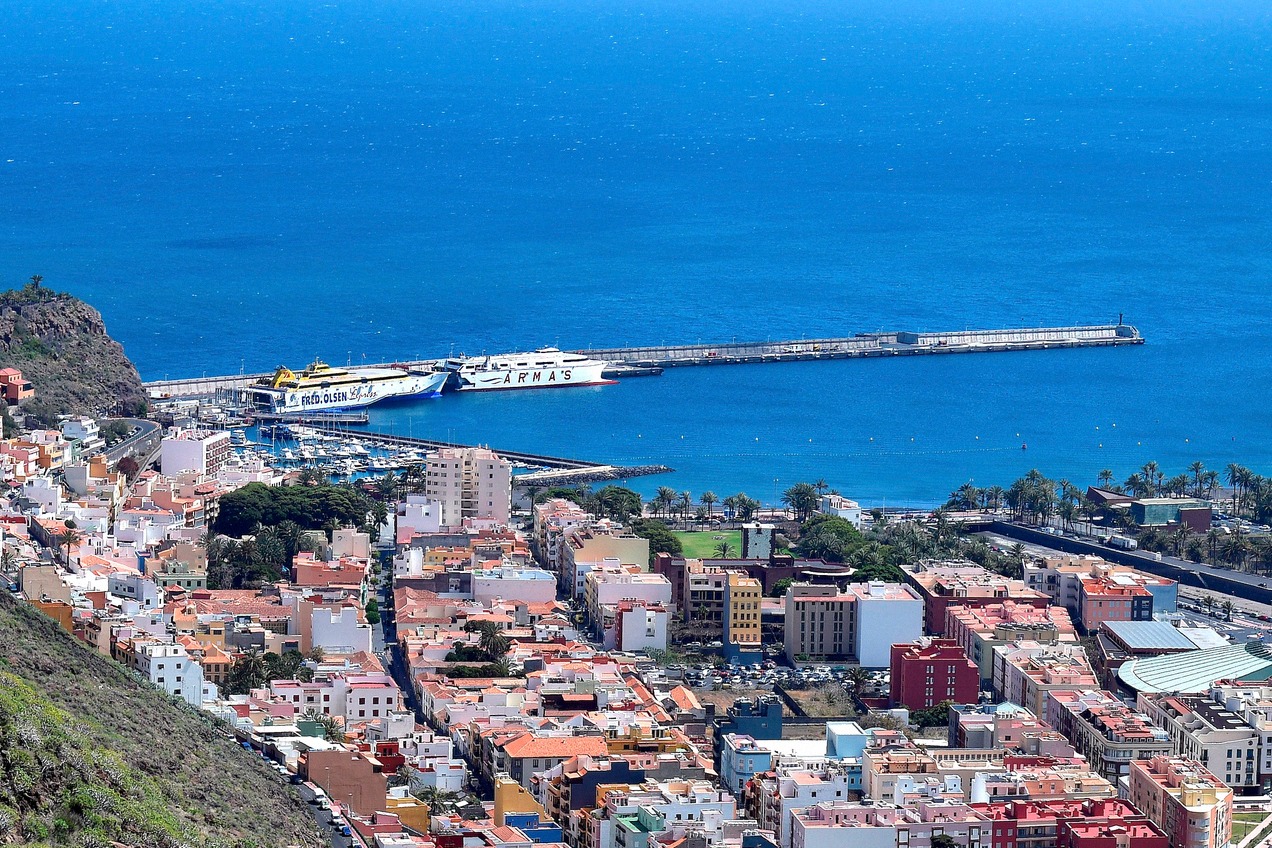
Getting there and the Cádiz terminal The ferry to the Canary Islands departs from the port of Cádiz at the Canary Islands terminal (Muelle Marqués de Comillas). By car, you reach the port via the A-4 motorway from Seville and Madrid; the access road is signposted. Cádiz railway station and the old town are just a few minutes' walk away, so you can reach the terminal comfortably even without your own vehicle. ## Check-in and departure Because this is a very long crossing involving vehicle loading, you should arrive at the terminal early, usually around two hours before departure. Have a valid ID card or passport ready, which the shipping company checks at check-in. If you're travelling with a vehicle or pet, allow extra time to register at the counter. ## On board Baleària Canarias operates large ro-pax ferries on the Cádiz - Canary Islands line, designed for several nights on board. On board you'll find restaurants, bars and lounge areas, outdoor decks with sea views, and an onboard shop. For the nights, you can choose between seats and cabins in various categories, including pet-friendly cabins. On the long Atlantic crossing, a cabin is particularly worthwhile. Payment on board is cashless, in euros. ## Vehicle, bike and pets You can bring cars, motorhomes, caravans, motorbikes and bicycles; the ferries have large vehicle decks, but spaces are in demand and fill up quickly for larger vehicles, so early booking pays off. If you're travelling by motorhome, you'll find the details in the guide Travelling to the Canary Islands by motorhome. Pets must be registered when booking and travel, depending on the ship, in pet-friendly cabins or in kennels; everything about this is in the guide Travelling to the Canary Islands with a dog. ## Arrival in Santa Cruz de La Palma and onward travel Santa Cruz de La Palma is the line's final stop, which makes for a correspondingly long journey. In La Palma, the ferry docks at the port of Santa Cruz de La Palma, right by the island's capital. From the terminal it's just a short walk to the historic old town, and you can reach La Palma Airport by car within minutes. Onward travel by bus, taxi or your own vehicle is straightforward from the central port.
Tickets and fares Baleària Canarias offers the route at a standard fare as well as reduced fares for Canary Islands residents and young travellers with the Youth Card. You'll get the best price by booking early and being flexible with your travel date and cabin. The booking window shows current prices for your travel date, and an overview of all Canary Islands routes is in the price overview.
Cádiz - La Palma
From the Spanish mainland to the Canary Islands
Next departures
FAQ Cádiz - La Palma
Frequently asked questions
Questions and answers about the Cádiz - Santa Cruz de La Palma ferry route
Which shipping company operates the ferry from Cádiz to La Palma? +
The Cádiz - La Palma route is operated by Baleària Canarias. Services on the Cádiz - Canary Islands line ran under the Naviera Armas Trasmediterránea brand until May 2026, before being transferred to the Baleària Canarias brand following the takeover by Baleària. Conventional ro-pax ferries operate on this route.
How often does the ferry run from Cádiz to La Palma? +
There is usually 1 departure a week, typically on Saturdays. The service runs year-round, though times change slightly by season. The exact times for your travel day are shown in the timetable.
How long does the crossing take, and are there any stops? +
The crossing takes around 48 hours, or about two days. Santa Cruz de La Palma is the line's final stop. En route, the ferry makes stops in Arrecife (Lanzarote), Puerto del Rosario (Fuerteventura), Las Palmas (Gran Canaria) and Santa Cruz de Tenerife. The arrival time can shift depending on weather and time spent at each stop; you stay on board throughout.
How much does the ferry from Cádiz to La Palma cost? +
The price depends on the fare, cabin, vehicle and time of booking. Baleària Canarias offers a standard fare as well as reduced fares for Canary Islands residents and young travellers (Youth Card). Since the route is long and mostly overnight, a cabin is well worth it. The current price for your travel date is shown in the booking window, and a comparison of all Canary Islands routes is in the price overview.
Can I bring my vehicle on the ferry? +
Yes, you can bring a car, motorhome, caravan, motorbike or bicycle. The ferries have large vehicle decks, but spaces on this route are in demand and fill up quickly for larger vehicles, so book early. Details on travelling by motorhome are in the guide Travelling to the Canary Islands by motorhome.
Can I bring my pet on the ferry? +
Yes, pets are welcome on board and must be registered when booking. Depending on the ship, animals travel in pet-friendly cabins or in kennels; have valid health certificates ready. Everything about the rules and practicalities is in the guide Travelling to the Canary Islands with a dog.
Where do the ferries depart from and arrive, and how do I get to the port? +
The ferries depart from the port of Cádiz (Canary Islands terminal at Muelle Marqués de Comillas). You can reach the port via the A-4 motorway from Seville and Madrid; Cádiz railway station is a few minutes' walk away. In La Palma you arrive at the port of Santa Cruz de La Palma, right by the island's capital and around 8 km from La Palma Airport.